
Best Time to Visit Tanzania for a Safari: A Month-by-Month Guide
If you ask us when the best time to visit Tanzania is, we could give you a month. But we would rather ask you a question first: What do you want to see?
Do you dream of watching thousands of wildebeest gather on the Serengeti plains? Perhaps you want to sit quietly beside a waterhole as elephants come to drink. Maybe you are looking for that perfect golden morning when the savannah is almost empty, the light is soft, and your only company is a pride of lions.
Or perhaps your Tanzania is a little different.
You want to climb Kilimanjaro before spending a few lazy days barefoot on the beaches of Zanzibar. You want to travel during the quieter months, when the landscapes are green and the safari vehicles are fewer. You want to photograph newborn wildebeest in the southern Serengeti. Or maybe you simply have a fixed holiday window and want to make the most of it.
The truth is, there is no single best month to visit Tanzania for everyone.
There is only the best time for you.
Tanzania is a year-round destination, but the experience changes with the seasons. The dry months can make wildlife easier to spot around water sources, while the green seasons transform the landscapes into something altogether different lush, dramatic, alive with birds, newborn animals, and enormous skies. TANAPA broadly describes June to October as the dry season, November to December as the short rains, and March to May as the long rains, while also noting that Tanzania’s many microclimates mean conditions vary by destination.
So, let’s forget the idea of one “perfect” month for a moment.
Let’s look at Tanzania one month at a time.

Quick Answer: When Is the Best Time to Visit Tanzania?
If you are looking for the short version:
- June to October: Excellent for classic wildlife safaris and generally easier game viewing.
- January to March: Wonderful for the green season, especially the wildebeest calving period in the southern Serengeti.
- July to October: A popular period for following the northern migration and, depending on timing and location, witnessing dramatic river-crossing activity.
- November to December: The short rains bring fresh green landscapes and can offer a quieter safari experience.
- March to May: The long rains create lush scenery, dramatic skies, and fewer visitors, though some roads and travel plans can be affected by wet conditions.
- For Kilimanjaro: The commonly favored trekking windows are generally the drier periods, particularly around January – March and June – October, although the mountain can be climbed year-round with appropriate preparation.
The important thing to remember is that wildlife does not follow our calendars.
Rainfall, grass, water, animal movements, and local weather patterns all influence what you see. A migration route is not a train timetable.
That is why good safari planning is about understanding the season not simply choosing a date from a list.

Tanzania Safari Seasons at a Glance
| Season | Approx. Months | What You Can Expect | Best For |
|---|---|---|---|
| Green Season | Jan–Mar | Lush scenery, calving, young animals, dramatic skies | Calving season, photography, birding |
| Long Rains | Mar–May | Heavy rainfall in many areas, vibrant landscapes, fewer visitors | Quiet travel, photography, green landscapes |
| Dry Season | Jun–Oct | Drier conditions, easier wildlife viewing in many areas | Classic safari, wildlife viewing |
| Short Rains | Nov–Dec | Fresh greenery, seasonal showers, fewer crowds in some areas | Flexible travelers, scenery, birding |
January: The Serengeti Begins to Breathe Again
January is a beautiful time to be in Tanzania. The short rains have often refreshed the landscape, leaving parts of the northern safari circuit greener and more vibrant. In the southern Serengeti, the great herds begin gathering around the short-grass plains as the cycle of life moves toward one of the most remarkable wildlife spectacles on Earth.
This is the beginning of the calving season. For wildlife photographers, January can be particularly rewarding. The combination of green landscapes, dramatic skies, young animals, and predators creates a very different Serengeti from the dry-season image many travelers have in their minds.
The official Tanzania Tourism Board highlights the calving season as one of Tanzania’s signature wildlife experiences, while TANAPA identifies January through March as the key period when the southern Serengeti becomes the center of wildebeest calving.
January is ideal for:
- Wildebeest calving season
- Wildlife photography
- Green landscapes
- Predator activity
- Travelers who prefer a quieter atmosphere

February: The Great Nursery of the Serengeti
February is one of the most extraordinary months for wildlife in Tanzania.
The southern Serengeti and Ndutu region can become a vast nursery, with newborn wildebeest appearing across the plains. The spectacle is beautiful, but it is not sentimental. This is the wilderness at its most honest.
Newborn animals take their first steps.
Predators watch.
Herds move.
Life and death sit remarkably close together.
TANAPA describes the southern Serengeti calving period as a major annual wildlife event, with hundreds of thousands of wildebeest giving birth during the broader January–March period.
February is ideal for:
- Calving season
- Predator sightings
- Wildlife photographers
- Travelers interested in animal behavior
- Green-season landscapes

February is not necessarily the month to choose if your only goal is dry weather. It is the month to choose if you want to witness the Serengeti at its most alive.
Contact UsMarch: A Different Kind of Beauty
March sits at the transition toward Tanzania’s longer rains.
The scenery remains wonderfully green in many areas, and the southern Serengeti can still be rewarding for travelers interested in the calving season.
For photographers, March can offer something special: fewer harsh contrasts, storm clouds building across the horizon, and landscapes that feel much more expansive than they do during the dry season.
The trade-off is that rainfall becomes a greater consideration as the month progresses.
March is ideal for:
- Green-season safaris
- Photography
- Calving season
- Fewer crowds
- Travelers with flexible schedules

If you don't need perfect weather every day, March can reward you with some of Tanzania's most beautiful scenery.
Contact UsApril: Tanzania in Its Greenest Mood
April is part of the long-rain season and is generally considered one of the wetter periods for many safari destinations.
This is not the month we would automatically recommend to someone taking their only once-in-a-lifetime Tanzania safari and wanting the easiest possible conditions.
But that does not make April a bad month.
Far from it.
The country can be spectacularly green. The skies can be dramatic. The light can be extraordinary. Birdlife is abundant, and the landscapes have a freshness that is difficult to describe until you have seen them.
The official Tanzania Tourism Board also highlights the green season as a time of lush scenery, dramatic skies, and opportunities for birding and photography.
April is ideal for:
- Photography
- Birdwatching
- Green landscapes
- Travelers seeking quieter experiences
- Flexible travelers

April is for travelers who understand that sometimes the most memorable photographs are made under a dramatic sky.
Contact UsMay: Quiet Tanzania
May continues the long-rain period.
This can mean wetter conditions, and road conditions should be considered carefully when planning a safari. But it is also a period when Tanzania can feel wonderfully unhurried.
For travelers who dislike crowds and are willing to accept a greater chance of rain, May can offer an intimate experience.
The landscapes are lush.
The air feels clean.
And the safari experience can be quieter.
May is ideal for:
- Travelers seeking fewer visitors
- Green-season scenery
- Photography
- Flexible itineraries
- Birdwatching

June: The Safari Season Opens Its Golden Chapter
June is when many travelers begin turning their attention toward Tanzania’s classic safari season.
The rains have generally eased in many northern safari areas. The landscapes begin drying, roads become more manageable, and wildlife viewing can become easier as animals increasingly concentrate around reliable water sources.
This is also an excellent time to combine safari with other experiences in Tanzania.
If you’re planning a longer journey, June can be a beautiful time to think beyond a single destination: Serengeti, Ngorongoro, Kilimanjaro, and perhaps Zanzibar.
TANAPA identifies June through October as the dry season, when wildlife can be easier to spot around water sources.
June is ideal for:
- Classic safari experiences
- Wildlife viewing
- Photography
- Combining safari and trekking
- Travelers who prefer drier conditions

June is when Tanzania begins to feel like the safari many first-time visitors imagined before they ever arrived.
Contact UsJuly: The Adventure Season
July is one of the most popular times to travel through Tanzania.
The weather is generally dry across many northern safari areas, and wildlife viewing can be excellent.
The Great Migration is also a major reason travelers choose this time of year. However, there is an important point that many travel articles fail to explain:
The migration is always moving.
You should never book a safari simply because someone told you, “July is river-crossing season.”
The herds move according to conditions on the ground. Rainfall, pasture, and water availability all influence their journey. The official Tanzania Tourism Board describes the migration as a movement from the southern breeding grounds toward the north, with some herds moving through the Western Corridor and others toward northern areas.
July is ideal for:
- Classic dry-season safaris
- Wildlife viewing
- Migration-focused trips
- Kilimanjaro trekking
- Travelers with fixed summer holidays
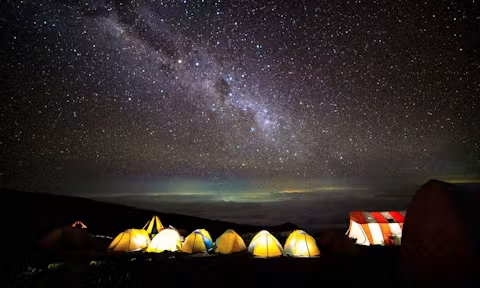
July is a wonderful month but if you're coming specifically for the migration, your itinerary should be designed around animal movement, not a calendar promise.
Contact UsAugust: Tanzania at Full Safari Rhythm
August is another highly popular month.
The weather is generally dry, wildlife viewing can be excellent, and the northern Serengeti becomes an important area for travelers hoping to follow the migration.
It is also a busy travel period.
If you are traveling in August, we recommend booking well in advance, especially if you have specific camps, lodges, or safari dates in mind.
August is ideal for:
- First-time safari travelers
- Wildlife viewing
- Migration trips
- Families traveling during school holidays
- Kilimanjaro

August is the month for travelers who want the classic Tanzania safari experience and don't mind sharing the season with other adventurers.
Contact UsSeptember: The Light Gets Interesting
September is one of those months that experienced safari travelers often appreciate.
The landscapes are dry, wildlife remains easier to spot in many areas, and the number of visitors may begin to soften compared with the busiest periods.
For photographers, the dry grass, warm light, and dust hanging in the air can create a beautiful atmosphere.
September is ideal for:
- Wildlife photography
- Dry-season safari
- Migration-focused trips
- Travelers seeking excellent game viewing
- Couples and private safaris

If you want the advantages of the dry season but prefer a slightly calmer rhythm, September deserves a serious look.
Contact UsOctober: The End of the Dry Season
October can be an excellent month for safari.
The landscape is at its driest in many areas, and wildlife remains concentrated around water sources.
Temperatures can begin to rise, and the first signs of changing weather may appear toward the end of the month.
For travelers who want to experience Tanzania’s northern safari circuit without necessarily traveling during the absolute peak of the season, October can be a smart choice.
October is ideal for:
- Wildlife viewing
- Dry-season safaris
- Photography
- Travelers seeking flexibility
- Combining safari and Zanzibar

October is often overlooked by people who think the safari season ends with September. It doesn't.
Contact UsNovember: The First Rains Arrive
The short rains begin to change the character of Tanzania.
The landscapes start becoming greener. Dusty plains begin to soften. Birdlife becomes increasingly interesting, and the country begins its transition toward the green season.
The rains are often seasonal rather than continuous, but weather patterns vary.
For travelers who don’t need every day to be perfectly dry, November can be a rewarding time to visit.
TANAPA describes November and December as the short-rain period, with greener scenery and fewer crowds in some areas, while noting that some tracks can become muddy.
November is ideal for:
- Green landscapes
- Birdwatching
- Photography
- Flexible travelers
- Quieter safari experiences

December: Christmas in the Wild
December is a fascinating month in Tanzania.
The landscape is becoming greener, migratory birds are present, and the atmosphere around the holidays can be wonderful for travelers who want to exchange winter snow for African sunshine.
The short rains can bring occasional showers, but these often form part of the landscape rather than ruining the entire day.
December is also a good month for travelers combining a safari with Zanzibar.
Imagine finishing a day among elephants and giraffes, then a few days later walking barefoot along a white-sand beach.
That is one of the great things about Tanzania.
December is ideal for:
- Holiday travel
- Families
- Safari and Zanzibar combinations
- Green landscapes
- Birdwatching

The Great Migration: Don't Chase a Calendar
This deserves its own section because it is one of the biggest mistakes we see travelers make when planning Tanzania.
You search for: “Best month for the Great Migration.”
You find: “July to October.”
You book July.
You arrive.
And then you discover the herds are not exactly where you expected them to be.
The Great Migration is a natural event, not a scheduled performance.
The migration follows rainfall, fresh pasture, water, and the instinctive movement of the animals. The official Tanzania Tourism Board describes the herds moving northward from their southern breeding grounds, while TANAPA’s own information highlights the complexity and scale of the Serengeti-Mara ecosystem.
This is why we recommend planning a migration safari around a region and a period, rather than promising an exact sighting on an exact date.
If your dream is to witness a river crossing, we can help you understand the likely timing and choose the right area but nature always gets the final word.
And perhaps that is part of the magic.
What Is the Best Time for a First-Time Tanzania Safari?
If this is your first safari and you want the classic experience, we generally recommend looking at the dry-season months from June to October.
Wildlife is often easier to spot in many areas, conditions are generally favorable for game drives, and the landscapes offer the quintessential East African safari experience.
But we would not automatically send every first-time visitor in August.
Your travel dates should depend on:
- Your budget
- Your preferred accommodation
- Whether you want the Great Migration
- Whether you want fewer crowds
- Whether you want to climb Kilimanjaro
- Whether you want to visit Zanzibar
- Whether you are a photographer
- Whether you are traveling with children
The “best” itinerary is not the one that looks best on Instagram. It is the one that makes sense for you.
What Is the Cheapest Time to Visit Tanzania?
Generally, the shoulder and green seasons can offer opportunities for travelers looking for better value, although prices vary considerably by accommodation, park, itinerary, and operator.
The important thing is not to choose a season based solely on price.
A cheaper safari that takes you to the wrong place at the wrong time is not necessarily a better safari.
Instead, think about the experience you want.
If you are flexible, we can help you find a period that balances:
Weather + wildlife + crowds + budget.
That is often where the real value lies.
Can You Visit Tanzania in the Rainy Season?
Yes. Absolutely. Tanzania does not close its doors when the rains arrive.
The green season can be incredibly beautiful, and the rains help create the landscapes and ecosystems that make the country’s wildlife possible in the first place.
There are, however, practical considerations.
Some roads can become muddy. Travel times may change. Certain areas may be less accessible. Weather can affect plans.
But if you are flexible and open-minded, the rewards can be considerable.
We specifically note that the long rains from March to May can bring lush landscapes and dramatic skies, while the short rains from November to December can offer greener scenery and fewer crowds.
Our Advice From Tanzania
If you remember only one thing from this guide, let it be this:
- Don’t ask, “What is the best time to visit Tanzania?”
- Ask, “What do I want my Tanzania to look like?”
- Do you want the dry golden plains of August?
- The first rains of November?
- The newborn wildebeest of February?
- The dramatic skies of April?
- The quiet landscapes of May?
- The migration moving north?
- The summit of Kilimanjaro under a clear morning sky?
- Or the warm Indian Ocean after a week in the bush?
There is no wrong answer. There are simply different versions of Tanzania waiting for you. And the best journey is the one planned around the experience you came here to find.
Plan Your Tanzania Adventure With Local Experts
At Bantu Pori Journeys, we are based in Tanzania and know that planning a safari is about more than choosing a month on a calendar.
It is about connecting the right destination, season, route, accommodation, and pace to the kind of experience you want.
Whether you are dreaming of the Serengeti, the Ngorongoro Crater, a Kilimanjaro trek, or a safari followed by Zanzibar’s beaches, we can help you put the pieces together.
Your Tanzania should not be a package picked from a shelf. It should be a journey that makes sense for you.
Ready to start planning?
Explore our Tanzania safari experiences or contact Bantu Pori Journeys to discuss your travel dates, interests, and ideal itinerary.
You Might Also Like
Continue the Journey


